

The Glenrothes
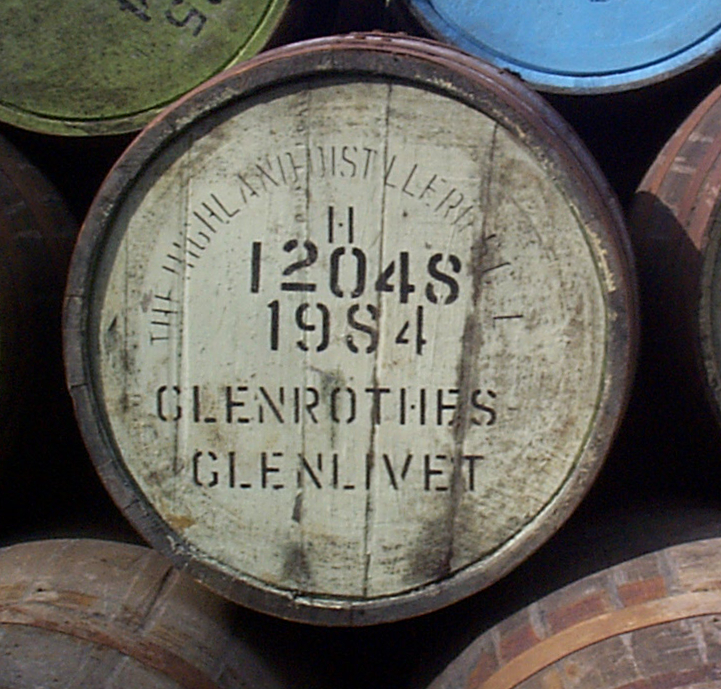
Glenrothes Distillery was the brainchild of James Stewart, a Rothes native who had developed a enduring passion for whisky. Stewart dreamt of situating a distillery which would produce a more refined, less hurried, lighter, creamier and fruitier style of drink which was matured in the best possible casks in his hometown.
His vision was characterised by four core principles: ensuring the plant was built directly on the site of a pure water source, providing a longer distillation than was the norm in order to produce a singular, mellow single malt, the utilisation of the finest sherry casks and, lastly, eschewing the use of any kind of artificial colouring.
A location was found at the site of a an old sawmill by the Rothes burn at the foot of the Mannoch Hills. The water for the whisky comes from natural springs and wells such as the Ardcanny Spring, the Brauchhill Well, the Burnside Well and the Fairies (or Lady’s) Well, in the nearby Glen of Dounie, as well as from the Rothes Burn itself. Therein lies at least some of the secret of Glenrothes as the local spring and well water is unbelievably soft and pure.
Stewart’s partners were local bankers Robert Dick and William Grant (who is not the same William Grant as per Glenfiddich and Balvenie). However, in the summer of 1878 a the great banking crisis occurred and James’ plans took a hit, forcing him to stand down from the business which was then taken over by Dick and Grant who were augmented in the management of the company by lawyer John Cruikshank. Another party who should be mentioned, as he was instrumental in the financing of the distillery, was the Reverend William Sharp, a minister of the United Presbyterian Church in Archiestown who raised £600 from amongst the local community, not because of any particular love of whisky but because the town was depressed and badly needed the employment possibilities which the distillery would bring.
In the summer of 1878 work commenced on the Glenrothes still house building. At the same time, a mill stream (or ”lade”) diverted the path of the burn in order to turn the water wheel which powered the distillery.
Glenrothes history was somewhat turbulent with two fires in 1897 and 1922 respectively and an explosion which destroyed a good part of the distillery buildings in 1903. Each time, the distillery re-emerged stronger from the crisis, doubling its capacity, for instance during the 1898 rebuild which followed the first fire. The distillery also opened on precisely the day of the famed Tay Bridge Disaster: 28th December 1879.
Like so many of the distilleries on Speyside, the single malt Glenrothes was something of a sideline and has rarely been produced as a stand alone product with the majority of the whisky it produces going into Famous Grouse and Cutty Sark blends.
Ever since 1879 the characteristics of Glenrothes have remained essentially the same, albeit some vintages have been matured in Bourbon casks (now known as ”Bourbon Cask Reserve” and formally ”Alba Reserve”) with their distinct honey and vanilla notes as against the traditional sherry casks which used to be known as ”Robur Reserve” and now come as ”Vintage Reserve” or ”Sherry Cask Reserve”.
Glenrothes is a complex and sophisticated drink. It’s light, fruity and joyous and sings with a slightly spicy nose and honied palette combining perfect malt and crystal pure water to form a backdrop which allows for all manner of gorgeous subtleties to emerge and this is why it remains a perennial favourite of whisky connoisseurs.