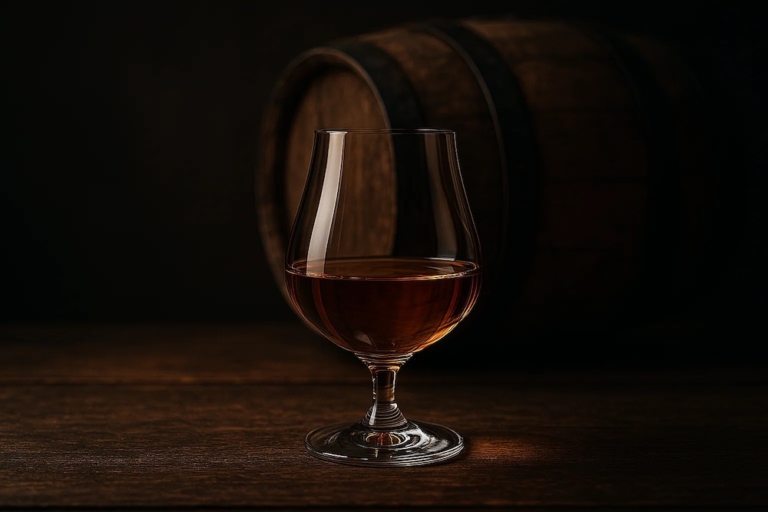
‘’Glenfarclas – The King of Whiskies & the Whisky of Kings. In its superiority, it is something to drive the skeleton from the feast and paint landscapes in the brain of man. In it is to be found the sunshine and the shadows that chase each other over the billowy cornfield, the hum of the bee, the hope of spring, the breath of May, the carol of the lark, the distant purple heather in the mountain mist, the dew of morn and the wealth of autumn’s rich content, all golden white with imprisoned light’’
That remarkably elegant and eminently poetic paean, brimming with unrequited admiration, to the unsurpassed brilliance of Glenfarclas was made by none other than legendary whisky entrepreneur Thomas Robert “Tommy” Dewar, 1st Baron Dewar of the eponymous brand when he first sampled an 1881 release of the Glenfarclas in 1912!
It sort of sums up what an honored position Whisky the cognoscenti bestow on Glenfarclas: a classic malt in the whisky firmament and a Speyside brand with a very long, proud history and synonymous with distilling excellence.
We know that the company was finally granted a whisky license in 1836, so some 13 years after the Excise Act of 1823 but its origins go back much further to the point where John Grant owned a painting of the Glenfarclas distillery which was dated 1797. There is evidence that the first distilling took place as early as 1791. Glenfarclas is pretty remote and looked for all the world like a farmstead. Only the chimney gave away the fact that this was a distillery, something noted by the great whisky writer, Alfred Barnard, who visited Glenfarclas in 1885.
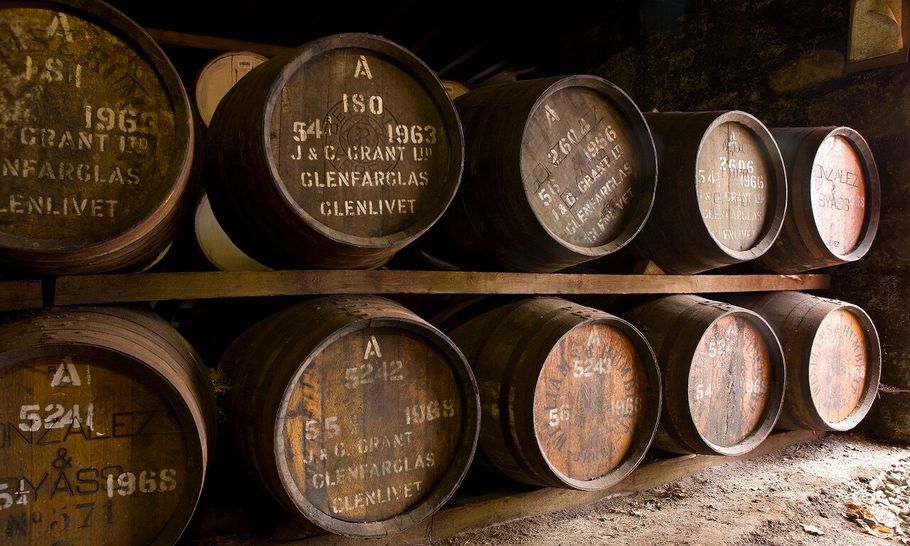
The founder was a farmer by the name of of Robert Hay and he tenanted a Rechlerich Farm on the Ballindalloch Estate in Banffshire. His principal crop was barley and Robert founded the distillery to
add value.
Ballindalloch is about a 45 minute drive south from the Scottish coastline at Lossiemouth and is about an hour’s journey by car due North from the royal family’s Balmoral Estate.
This is a magical, mystical landscape of austere beauty marked by broad, undulating hills, a stark rolling panorama of green open spaces studded with ancient castles, churches, ancient remains and small villages. The green aspect is indeed key, here as Glenfarclas translates from Gaelic as”Valley of green grass”.
The water source for Glenfarclas is Ben Rinnes, which towers over the distillery and is the tallest freestanding mountain in the Moray area.
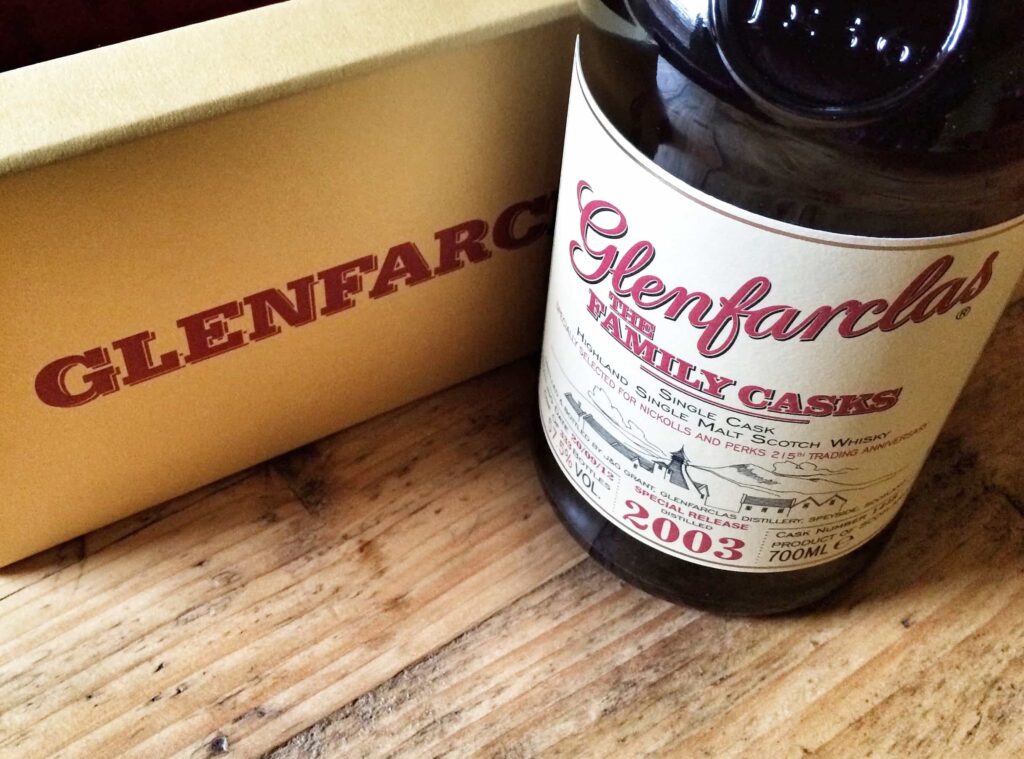
Glenfarclas distillery remained in the founder’s hands until Hay’s death in 1865. In June of that year, it was bought by John Grant for the sum of 511 Pounds and 19 shillings. Unbelievably, the company remains in the hands of the Grants until today and we are now down to the 6th generation of the family at the controls.
Not long after the company entered the US market, the Pattison Brothers of Leith took a 50% stake in Glenfarclas and the investment was used to finance a major expansion of the distillery. Pattison were one of the most prominent blenders of their day but they went under in what was the infamous ‘’Pattison Crash’’ of 1898, an event which decimated the industry and the aftershocks of which lasted the better part of a decade. Somehow, some way, Glenfarclas managed to survive, albeit that it took a generation to fully recover. The Grants’ experience with Pattison shaped their attitude until the present and the bitter experience with Pattison is the main reason why Glenfarclas remains an independent company into the present.
Glenfarclas only emerged as a single malt whiskey comparatively recently in its history. It was blended with Glenlivet for many years and, in fact, was shipped and exported to the US as Glenfarclas-Glenlivet as far back as the 1880’s. Even as recently as 1952, 96% of Glenfarclas production appeared in blended brands. In fact the company did not even release a cask strength single malt until 1968.Nowadays, by far the majority of all production is bottled and sold as Glenfarclas.
The company was also a comparatively small setup until well into the 20th century and only had two stills until 1960 when two additional stills were added. In 1976 they once more added two stills, so six in all. Three years earlier, in 1973, Glenfarclas did something quite radical for the time and set up a visitor centre.
One facet of Glenfarclas is rather odd: it’s far more recognizable and better known internationally than it is in its home market of the UK. This is quite intentional. as the whiskey market in the UK is very much dominated by large supermarket chains, the traditional ‘’off licenses’’ where spirits were previously sold until the 1970’s and 1980’s now only representing a very small part of the retail market. As it favors independent production, Glenfarclas also favors independent distribution and, as a result, 95% of production is for export, usually through smaller independent distributors. An artisanal flavor runs through each aspect from production to sale. Of the 5% of product that remains in the UK, their excellent 10-year-old is the preferred one.
This artisanal, craft aspect, the whisky being very much the hallmark of the connoisseur section of the market, augured for a fairly steady but never a mass rate of sales throughout the late 20th century (nothing in terms of real volume production but rather a gentle, carefully managed expansion). Consequently, throughout this time Glenfarclas managed to assemble a priceless collection of precious casks.
Glenfarclas is distilled twice and has no coloring agents added. It’s pure in the best sense of the word. Never pour and drink immediately. It needs to settle in the glass and, if you give it a few minutes, it will sing to you!
Their obsession with the quality of the is very singular John Grant still travels on occasion to Jerez in Spain and to a very particular bodega, Miguel Martin, to take back the very best quality oloroso sherry casks in which to mature the product. It’s also bottled very simply and without fanfare: The concentration is exclusively on the quality of product inside.
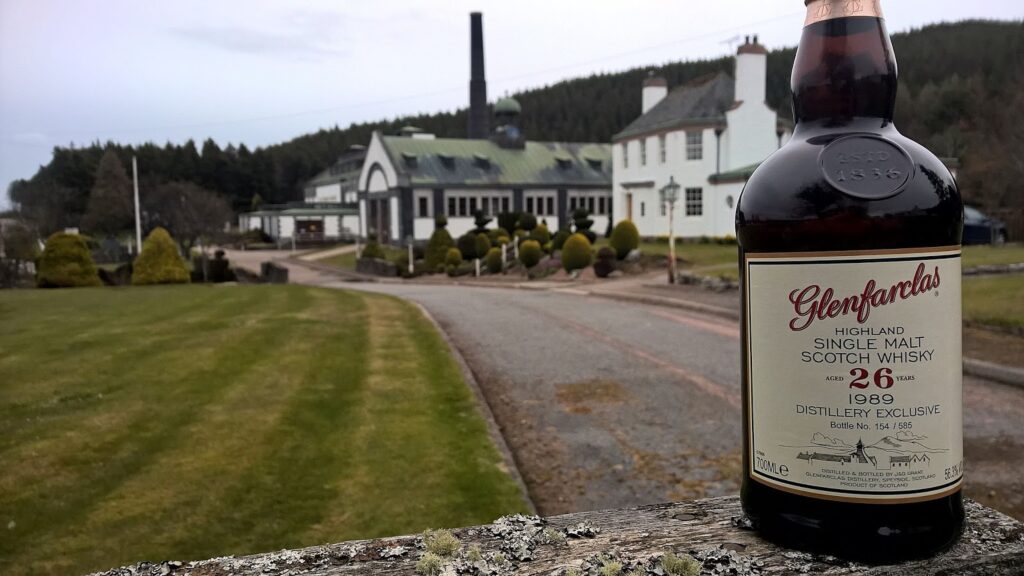
This is a very delicate, evocative and subtle whisky. To quote ‘’D&M Tasting Notes’’ reviewing a 21-year-old:
“It’s a ‘’Speyside that distinctly benefits from time in the glass. The nose of this 21 year old shows soft caramel, honey, barrel char, bruleed bananas, yellow apples, toasted nuts, sage, and cocoa powder. The palate is pretty with toffee, caramel, triscuits, chicory, cream, ephemeral smoke, and Werther’s Original.’’
‘’If you expect all Glenfarclas to be heavy, first-fill sherry bombs, think again. This has honey, pear, light vanilla, cinnamon bark, toffee, grilled apricot, and a squirt of peel oils. It’s lithe and expressive, with creamy orange fondant and grapefruit, then spicy licorice, peppermint, and finally, banana chews and toffee. A spirited burst of spices on the finish, with a further drenching of citrus flavors.’’
If one was ever to describe a tasting adventure, that would be it!
Glenfarclas is a universally admired malt to the extent that a rival distiller said of it ‘’Of all the Whiskeys, malt is king, of all the kings, Glenfarclas reigns supreme.