

Speyside
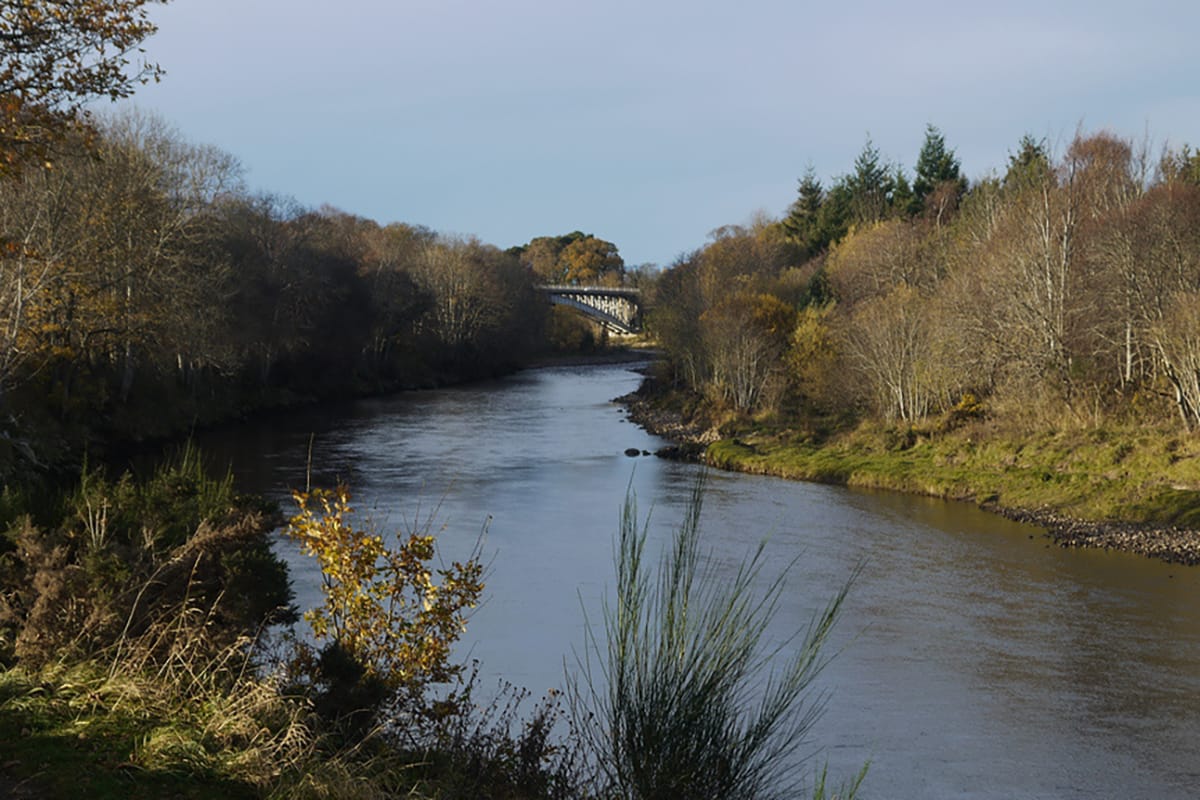
Speyside, one of 5 major whisky distilling regions
Speyside, an area in between Inverness and Banff, is easily the most prolific of Scotland's 5 major whisky distilling regions. It's home to 50 or so distilleries which account for around 50% of all the malt whisky produced in Scotland. The river Spey (Uisge Spè in Gaelic), which is located in the North East of the country, flows for 172 km from its headwater source on Loch Spey to its mouth at the Moray Firth and thence out into the North Sea. Loch Spey is actually a tiny body of water. Situated in the hill region known as the Cairngorms and in a forested area known as the Corrieyairack Deer Forest, this freshwater loch is literally only 300m x 200m across. Loch Spey is fed each spring by pristine snowmelt from the surrounding hills.
The area around the river’s path is known as Strathspey (Srath Spè in Gaelic). A ”Strath”, by the way, is a broad grassland mountain river valley surrounded by hills. Strathspey is a lush, gorgeous scenic corner of the Highlands typified by broad, open spaces, intimate little glens (valleys) and rolling hills. The grandeur here, unlike further north and west in Scotland, derives somewhat more from perching oneself on a high hill and gazing down on the ravishingly rich colours painted by the gently undulating landscape than from the vast spectacle of Scotland’s more overtly mountainous regions. Speyside is essentially a place of splendid rolling hills and glens which offer up no end of enthralling and enchanting vistas. Despite being dazzling to the eye, it has an intimate flavour to it, something perhaps reflected by the quality of the local whisky.
The area is dotted over with distilleries and these are grouped by locals and cognoscenti by area name, be those landscape features of towns; so there are Spey distilleries, Bogies, Deverons, Findhorns, Fiddichs, Invernesses, Islas, Lossies, Rotheses, Strathislas etc.
However, different independent distillers or indeed those owned by large corporates, are to be found in one small area, often within sight or a five or ten minute drive one from the other and the geographical references function only for the purpose of touristic and tasting visits and from the point of view of understanding which particular distilleries are located in which districts. There’s nothing but a few generalities which bind together the taste of whiskies from any one district. Distilling methods and casking often mean that two adjacent distilleries will produce widely divergent whisky flavours and bouquets from one another.
That said, there are some commonalities. Speysides tend to have a slight savour of pome fruits, often of green apples or sometimes of pears, as well as a gentle tang of honey and vanilla. You’ll also find a suggestion of delicious caramel, floral and honey notes. In general Speysides offer up a slight of peatiness and they are more likely to have a hint of a smoky palette, albeit a very subtle one.
What makes Speyside whiskies so interesting is that very subtle interplay combining either more or less of all these varied elements. Speysides are also sweeter than other whiskies and are they are, as a rule, lighter bodied.
Whisky distilling goes back a long way in Speyside. Illicit distilling was apparently ubiquitous in the region throughout the 17th and 18th centuries. The excises on whisky were comparatively high, so the relative remoteness and higgledy piggledy nature of the lay of the land with secret, hidden glens tucked all over the place was a tremendous attribute for illicit brewers.
Formal, licensed distilleries in Scotland began in the 18th century with permission to brew whisky legally at Glenturret in 1775 (It had been operating illegally since 1763). Glenturret, today, can lay claim to being the oldest continually operating distillery in Scotland. It was followed by Bowmore (Islay) in 1779 and Strathisla, which is itself a Speyside whisky, in 1786. Thus we can say that legal brewing commenced in the Speyside area in 1786.
However, Speysides were not that well known or appreciated for around another 40 years until such time as King George IV visited Edinburgh in 1824…..and George fell for an illegal whisky!!!
Of course nowadays, visits by the Monarch to Scotland are a very regular occurrence, so much so that the Queen (who is known as Elizabeth I and not II in Scotland as Elizabeth I of England didn’t rule over Scotland) resides at her castle at Balmoral on regular occasions, opens the Scottish parliament in Edinburgh and so forth.
In 1824, no Monarch had actually visited Scotland since the Scottish coronation of Charles II in 1651. The newly crowned George’s trip was organised, promoted and choreographed with over-the-top pageanty and theatricality by none other than famed author Sir Walter Scott. Known as the ”One and twenty daft days” (a story in and of itself!) the trip, essentially a royal progress, was key, other than for political the political and symbolic aspects, for two cultural reasons which have resounded throughout the world until this very day: Firstly, the visit drew huge attention to the wearing of the kilt on ceremonial occasions and secondly, the royal tour put Speyside whisky firmly on the map.
King George had heard of and was anxious to try out an illicitly distilled whisky from Ballindalloch in Glenlivet distilled by George Smith. Smith obtained a formal license to distill whisky, most probably at the prompting of the king, from Elgin some two years later and the whisky is with us to this day.
The king’s taste for whisky permeated through the court, nobility and bourgeoisie and through the remainder of the 19th century whisky’s influence grew over a wider and wider geographical area and into Continental Europe and wider afield.
Throughout, Speyside brands have remained the most popular overall in terms for the proportion of all Scotch whisky sold throughout the world, although various iconic labels from other regions of Scotland such as John Walker, Ballantines etc have of course emerged as top global brands in their own rights. However, what you see in other regions is one or two major labels which have stood out from the others as international best sellers, whereas more Speyside brands in aggregate are purchased and enjoyed around the world. So Speysides, when taken together, have a higher global profile.
There are many legendary and classic Speyside labels, notably Glenfiddich, Glenlivet. Macallan, Speyside, Dufftown and Strathisla etc. However, there are some other extremely fine whiskies emanating from the region. Aside from the collector value which Speysides offer, comparing, contrasting and understanding their subtleties and delightful palettes can become an immersive and highly enjoyable preoccupation for any whisky connoisseur or novice alike.